Implementation study
How Spatial Memory Guides Selective Sensing
How simulated agents organize range observations into a shared spatial record and decide which areas deserve another look.

We investigate how intelligent systems perceive their environments, build useful spatial memory, direct attention and adapt decisions under real resource constraints.
A machine observes only part of its surroundings. What information matters, which details deserve memory, and when should it observe again?
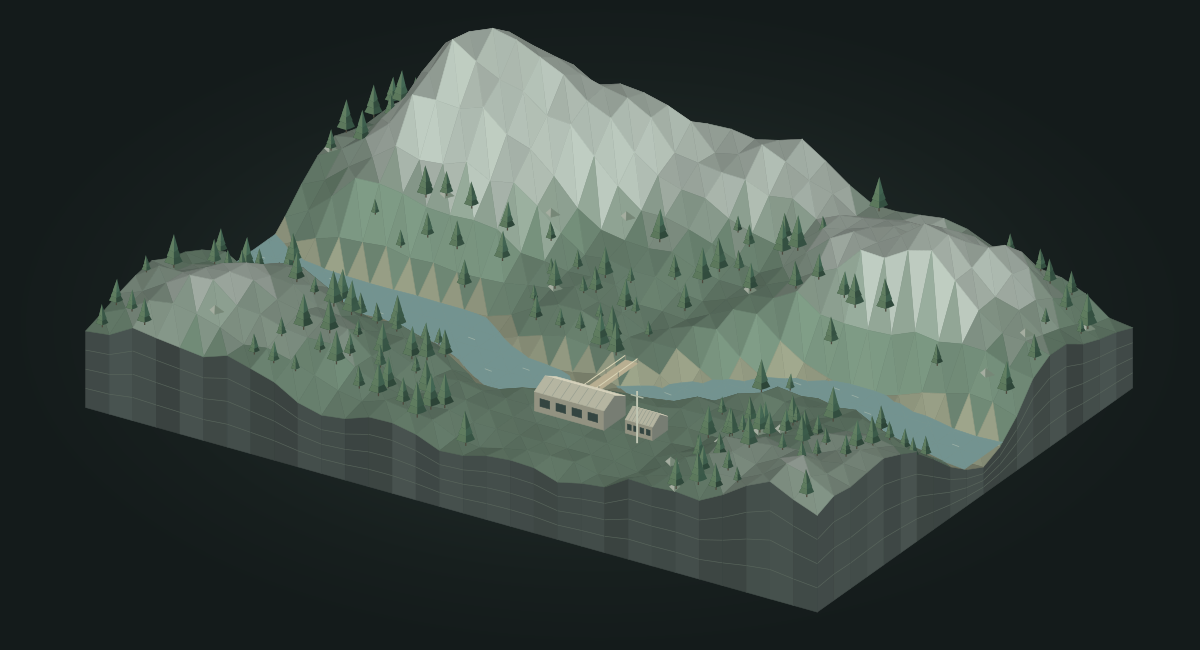
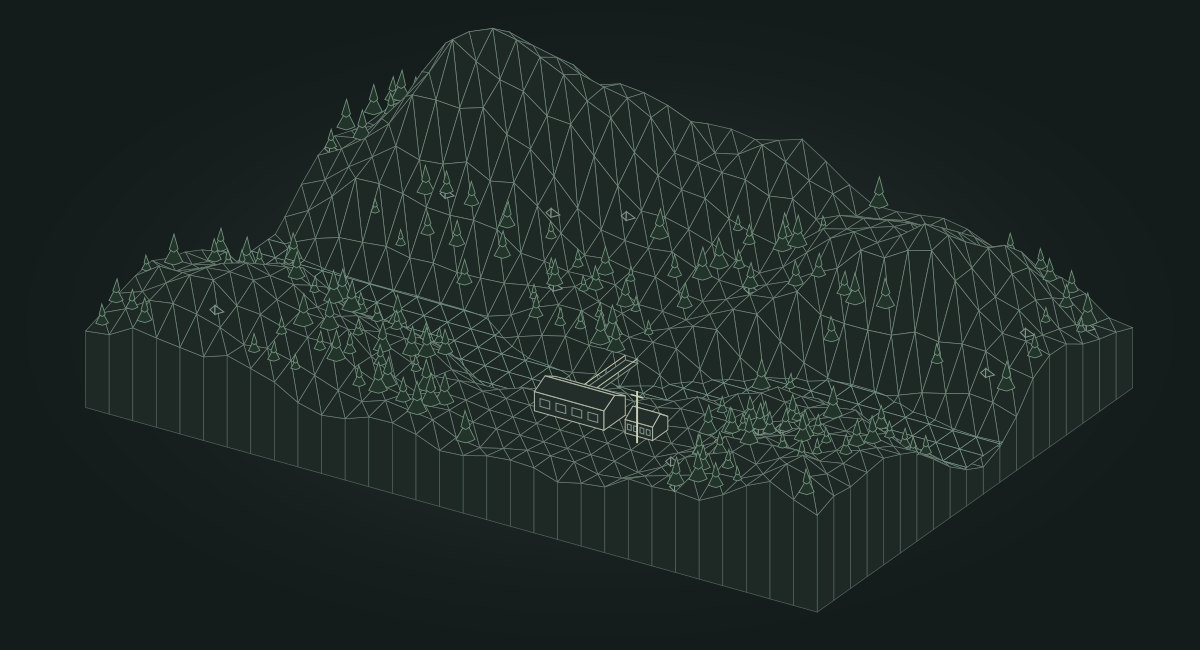
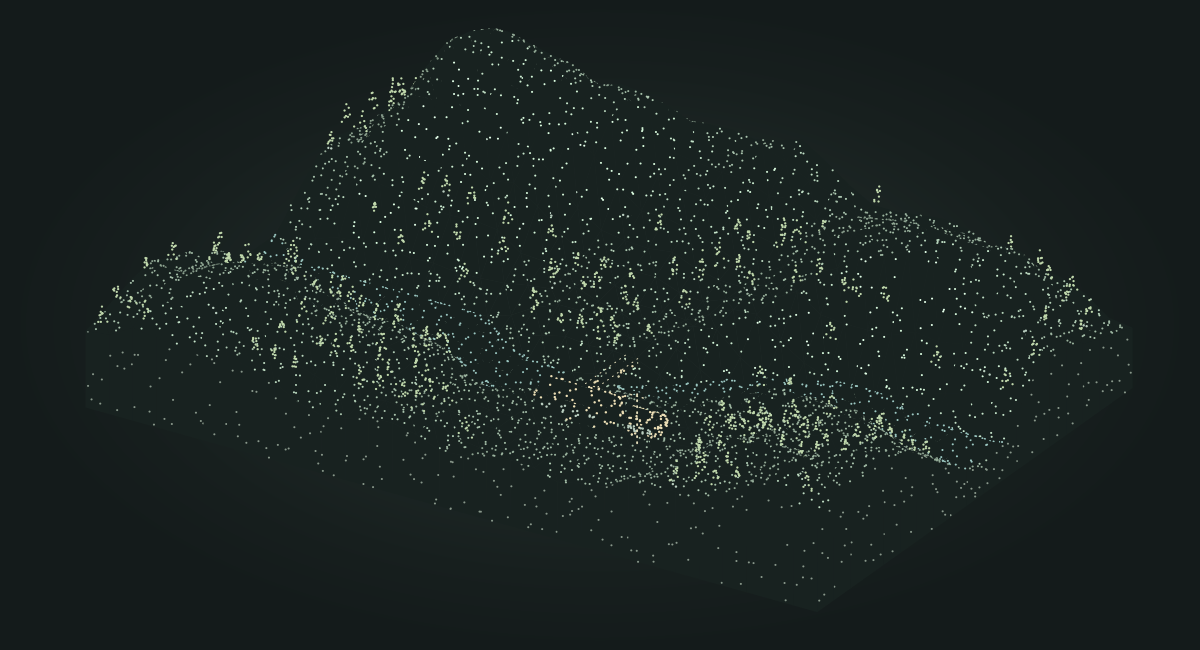
One environment, three illustrative representations. These conceptual views are not sensor-derived reconstruction.
Where does another observation add detail? Our simulator stores range returns in a sparse grid and refines voxel maps around individual objects. A 3D semantic scene graph relates the objects in memory.
Simulated agents share observations of their surroundings. A heuristic directs additional sensing toward regions of interest, so we can examine what each revisit adds to the shared map.
Could a learned policy choose better places to look? We plan to compare its choices with the current heuristic under the same sensing budget and measure how much new evidence each collects.
If one robot sees a change, how might the rest of its team anticipate it? We want to study collective intelligence by asking how agents could share predictions from learned world models.
The simulator casts range rays and derives camera detections from scene metadata. It supplies object identities and poses. Agents use the resulting spatial memory to choose where to sense next. Telemetry records the returns and computational workload of those choices.
Read the research study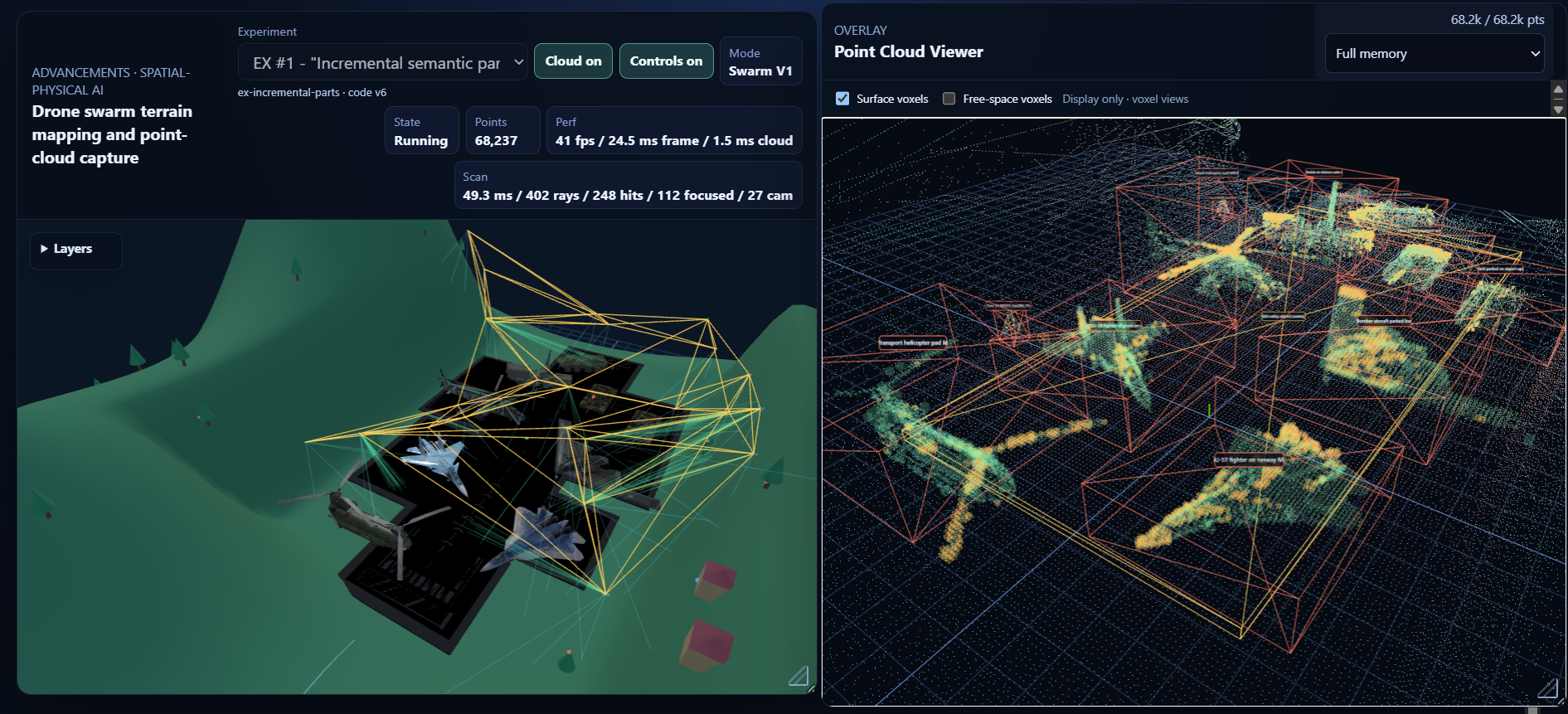
Research studies and authored notes examining spatial memory, coordinated autonomous systems, experimental methodology and measurable computational trade-offs.
How simulated agents organize range observations into a shared spatial record and decide which areas deserve another look.
A comparison of seven historical implementations examines the time and memory cost of keeping a growing spatial record useful to 24 simulated agents.
Why interpreting and measuring a swarm matters more than making a simulation look intelligent.
An inspection robot has limited time to revisit a structure. Which surface needs another pass? Similar questions about allocating observations arise in industrial monitoring, scientific simulation and decision support.
For predictive intelligence, we want to test whether combining different kinds of sensor data can help an agent anticipate its next observation. Further work in Agentic AI would ask how a language instruction could guide a team’s sensing priorities over a longer task.
Raven Bionics is an independent, founder-led research and development venture studying spatial intelligence for autonomous systems. We use simulation to observe what agents remember, test how they direct attention and measure the computational cost of those decisions.